Drone regulations in Europe (EASA) in 2026: the complete guide (categories, licence, registration)
Open category, A1/A2/A3 subcategories, C0 to C4 classes, operator registration, Remote ID: everything a DJI drone pilot needs to fly legally across the EU/EEA in 2026 — plus how to find your national authority.

Flying a recreational drone across the EU/EEA is perfectly legal — as long as you respect the European framework introduced by EASA. The good news: the core rules are the same in every member state; only the national registration portal and geo-zone map differ. This guide, updated for 2026, covers the categories, mandatory registration, training and no-fly zones.
The “open” category: the one 99% of recreational pilots use
Almost all recreational flights fall within the open category. It covers drones under 25 kg, flown within visual line of sight (the pilot keeps the drone in direct view) and at a maximum height of 120 metres above the ground. No prior authorisation is required: you just have to meet the conditions of the subcategory that matches your aircraft.
The three subcategories A1, A2 and A3
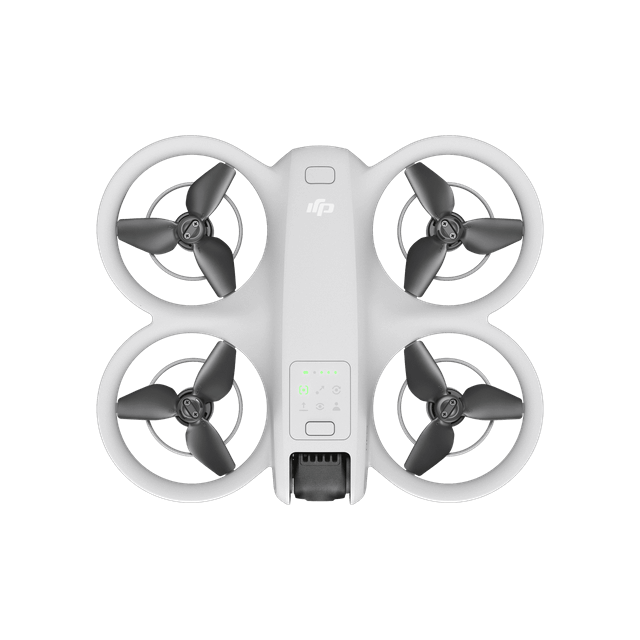
- A1 — flying “over” isolated people: reserved for the lightest drones (under 250 g, like the DJI Neo, or C1 class). You never deliberately fly over gatherings of people.
- A2 — flying “close to” people: for C2 class drones, with a horizontal safety distance (up to 30 m, or 5 m in low-speed mode).
- A3 — flying “far from” people: for heavier drones (C3/C4 classes), at least 150 m from residential, commercial or industrial areas.
In practice, the lighter your drone, the more freedom you have. That is the whole point of sub-250 g aircraft.
Classes C0 to C4: the European marking
Since the “drone class” CE marking became widespread, every new aircraft carries a label from C0 to C4 that determines the flight subcategory allowed:
- C0: under 250 g (e.g. DJI Neo, Mini). A1 flight, minimal training.
- C1: under 900 g. A1 flight, online training required.
- C2: under 4 kg. A2 flight, A2 certificate needed.
- C3 / C4: up to 25 kg. A3 flight only.
Mandatory registration: the operator-registration reflex
Across the EU/EEA you must register as a drone operator with your national aviation authority as soon as your aircraft weighs 250 g or more, or is fitted with a sensor (camera) capable of capturing personal data. In practice, almost all camera drones are concerned — including some very light models as soon as they film. Each country runs its own operator register — for example D-Flight (Italy), the LBA via DIPUL (Germany), AESA (Spain), AlphaTango (France) or the CAA (UK) — but the registration is valid across the EASA area.
- Create an account on your country’s UAS operator register (see the examples above).
- Register as an operator: you receive a unique operator number.
- Put this number on your drone (label) and in the DJI app.
Training: free and quick
For the open category, the basic training is done online and free of charge. It ends with a short exam (multiple choice) that issues a training certificate. For the A2 subcategory, an additional theory exam (“A2 certificate”) is required. For recreational flying with a light drone, the online training is enough in the vast majority of cases.
Where are you allowed to fly?
This is the most important question. Some zones are forbidden or restricted: airports, military bases, power plants, prisons, the cores of national parks, and much of dense urban areas. Before every flight, check your country’s official UAS geo-zone map — for example ENAIRE Drones (Spain), DIPUL (Germany), D-Flight (Italy) or Geoportail (France). The golden rule: never fly over other people without reason, nor over private property, and respect privacy.
- Max height: 120 m above the ground.
- Visual line of sight only (except FPV with an observer — see our FPV guide).
- No flying over people or gatherings.
- Respect UAS geo-zones (your national map).
Remote ID: electronic remote identification
As the European framework has ramped up, drones in the relevant classes must broadcast electronic remote identification (Remote ID): in flight, the aircraft continuously transmits its serial number, position, altitude and the take-off point. In practice, on a recent DJI drone this feature is built in and activates through the app — you just enter your operator number. It is seamless, but mandatory for the aircraft subject to it.
What about FPV (immersive flight)?
Immersive flight with goggles such as the DJI Goggles 3 adds one more constraint: since the pilot cannot directly see the drone, the law requires an observer at their side, able to keep the aircraft in view and warn of any danger. The rest of the open category rules still apply.
In short: register with your national authority, take the online training, check whether liability insurance is required where you fly, fly within line of sight below 120 m, avoid no-fly zones and never fly over people. With these reflexes, you are compliant across the EU/EEA.
Frequently asked questions
Do you need a licence to fly a DJI drone in the EU?
There is no single “licence”, but free online training (the EASA A1/A3 certificate of competency) is mandatory as soon as the drone weighs 250 g or more, or has a camera. For the A2 subcategory, an additional theory exam (A2 certificate) is required. You take it with your national aviation authority.
Is a sub-250 g drone like the DJI Neo exempt from everything?
No. Even under 250 g, as soon as the drone films, you generally have to register as an operator with your national authority and respect the flight zones. Some countries (e.g. Germany) also require liability insurance for every drone. The training is much lighter, though.
What is the maximum allowed height?
120 metres above the ground in the open category, unless stricter local restrictions are shown on your national UAS geo-zone map.